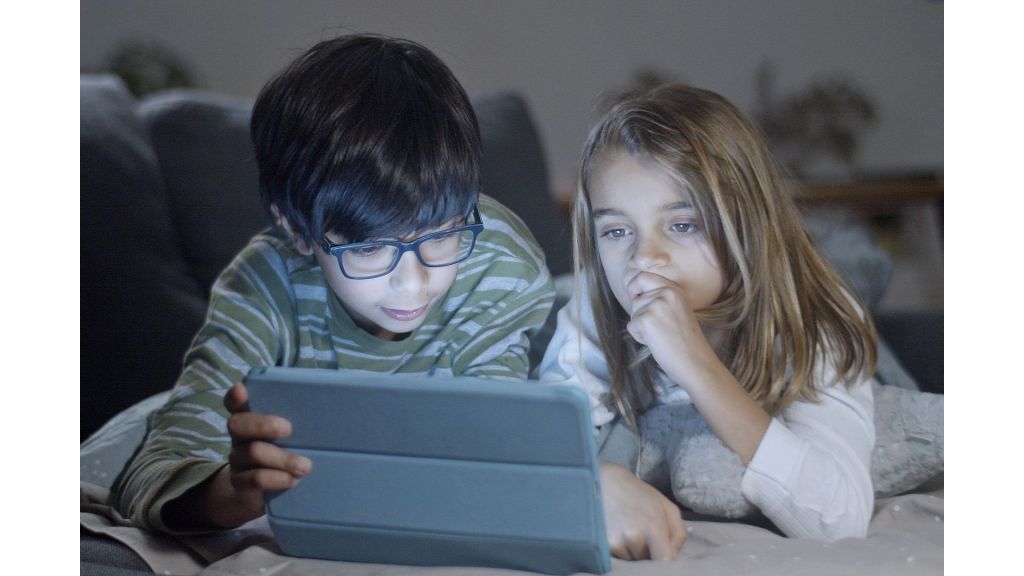
We talk a lot about our information diet – the news we consume, the headlines we scroll, the relationships we keep. But we rarely stop to ask:
What information diet are our kids living on?
Screens used to be the “backup plan.”
Now they’re the default.
And the content? Faster, louder, and more chaotic than ever.
Fast Cartoons, Fast Cuts, Fast Dopamine
Today’s kids’ shows move at a speed no developing brain was designed to handle. Flashing scenes every second. Rapid pacing. Nonstop noise.
And we now have the research to show their impact.
A 2024 systematic review found that fast-paced TV content can immediately impair kids’ attention span, self-control, and executive function – even after a single viewing session.
Other recent studies (2022–2025) show that:
- Excessive screen use in toddlers and preschoolers is linked to language delays, smaller vocabularies, and weaker expressive language.
- For older kids, more screen time correlates with lower reading and math scores.
- Both parent and child screen habits combine to shape long-term behavioral and emotional development.
Screens aren’t harmless fillers.
They’re inputs – and kids absorb every one.
The Alternative That Actually Works: Read & Play
Parents often hand screens to toddlers in restaurants, car rides, or during errands just to keep things quiet.
But this unintentionally teaches the brain:
“When I’m bored or uncomfortable, give me a screen.”
That creates a dopamine loop – and it sticks.
What actually helps kids develop emotionally and cognitively is simple:
Reading + Play = Regulation + Development
- Reading builds imagination, language, and comprehension.
- Play builds focus, creativity, independence, and problem-solving.
- Together, they help kids learn appropriate energy states, calm for bedtime, imaginative for playtime, attentive for learning.
And instead of screens during outings, we keep things interactive:
At restaurants, we bring:
- mini Picasso tiles
- small building blocks
- puzzles
- books
- simple brain games
And our favorite activity? Games we play together, like:
- Eye Spy
- A descriptive guessing game where one person secretly picks an item and describes it until the other guesses
These aren’t distractions, they’re connection points.
They teach patience, observation, communication, and shared focus without overstimulation.
Where Tonies and Yoto Fit In
Tonies and other audio-story devices like our Yoto player are a game-changer because they support development without hijacking the brain.
They:
- strengthen imagination
- build vocabulary
- boost listening skills
- encourage independent, creative play
- regulate instead of overstimulate
- provide content without ads, algorithms, or flashing visuals
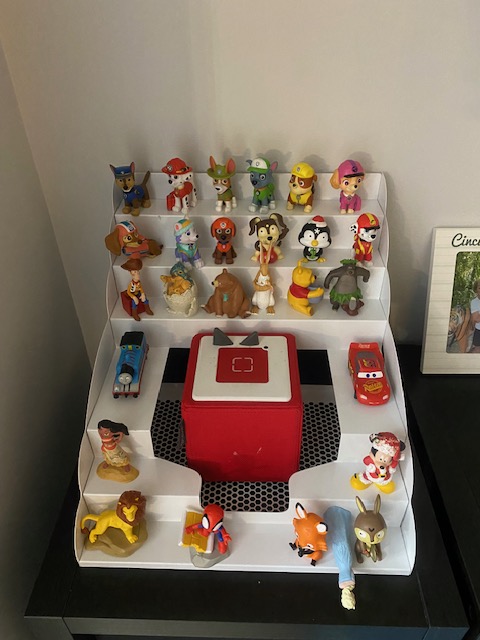
In our home, we use Tonies – blocks out, toys out, stories playing softly in the background generally when our kid is solo playing.
Play stays the focus, not the device.
It’s the perfect middle ground:
story exposure without screen exposure.
The Yoto player we use when travelling. We like to camp and its 3-4 hours to the camp site so he can listen to a Yoto card that tells a story or has fun facts (his favorite).
Its important to mention that anything can be overstimulating, so make sure to regulate the audio also.
Why Family Movie Night Still Matters
Here’s the irony: I’m not anti-screen. I’m anti-mindless screen.
Screens used with purpose can bring connection, comfort, and memories, especially when the experience is shared.
My son looks forward to our Friday night family movie night.
We turn off the lights, pick a movie together, pile onto the couch, and watch something slow enough and thoughtful enough for his age.
And I know – without question – he will grow up remembering that.
Not the background TV.
Not the auto-played cartoons.
But the ritual.
The togetherness.
The safe, warm feeling of being with his people.
Family movie night gives kids something screens alone never can:
a sense of belonging.
The Real Message: Curate Their Information Diet
If fast food affects the body…
fast information affects the brain.
A healthy information diet for kids looks like:
- 📚 Daily reading with parents
- 🎧 Audio stories during calm play
- 🎨 Screen-free creative playtime
- 🧩 Hands-on, stimulating toys when out
- 🗣️ Conversation-based games and parent interaction
- 🍿 Purposeful shared media experiences like family movie night
- 🚫 Avoiding fast-paced, chaotic, overstimulating content
Kids deserve inputs that build them – not overstimulate them.
And it starts with us.
If you’re interested in some of the toys and tools we use, like mini Picasso tiles, our Tonies box or Yoto player– I’ve included links below to the exact items we use at home. These are simple, screen-free options that actually support a healthy information diet for kids.
Some of the links below are affiliate links. This means I may earn a small commission if you choose to purchase through them, at no additional cost to you. I only recommend products and tools that I genuinely believe add value.
I had to share this also. This is something we get asked about a lot and it has made storage for the individual Tonie’s much easier.

 Free Yourself Daily Hub
Leave a comment