Why Your Information Diet Matters More Than You Think
“Your relationships are your biggest source of information.”
And your brain becomes what you’re exposed to the most.
Before we get into headlines, algorithms, or trending media – the most powerful information source in your life is the people around you.
Every conversation, every tone, every expectation, every bit of energy someone brings into your world, your brain is constantly absorbing it. Relationships don’t just shape your emotions. They shape your beliefs, expectations, and sense of what’s “normal” and acceptable.
If the people closest to you are supportive, grounded, encouraging growth, your mind reflects that. If they’re toxic, draining, negative, or chaotic, your mind comes to accept that as normal. And over time, you begin to believe: that’s what I deserve, that’s how life should be.
If I could give you just one piece of advice, it would be this:
The single most important decision you make in your youth is who you choose as your closest friends-they will shape your character, your habits, and your future.
And as an adult, the most important decision you will ever make is who you choose to marry-that choice will shape the rest of your life.
Environment, Relationships & Information Programming
Your environment – at work, at home, among friends – is part of your information diet. I know that I am repeating this but its important!
- If your daily input consists of stress, gossip, judgment, toxicity – your brain learns that this is “normal.”
- If negativity, conflict, and emotional drainage become constant, your brain normalizes it – and you risk internalizing low expectations for your well‑being.
- That’s why interpersonal relationships matter as much as media or digital content. The people you spend time with daily are information conduits.
Why the Youth Mental‑Health Crisis Matters for All of Us: The Social Media Effect
No one can deny that we live in a social‑media world, and we all want to feel connected. Almost everyone has some form of media app for that very reason. Even a simple scroll through Facebook can turn into either a positive interaction or a negative experience filled with comparison and unrealistic expectations.
In Jonathan Haidt’s The Anxious Generation, he argues that the shift to a “phone‑based childhood” – driven by smartphones, social media, and online gaming – has played a huge role in skyrocketing rates of depression, anxiety, self‑harm, and suicide among young people.
Some striking trends:
- Suicide rates among people ages 10–24 increased roughly 62% from 2007 to 2021 (from 6.8 to 11.0 per 100,000).
- Among U.S. high school students, frequent social media use is now associated with increased bullying, persistent feelings of sadness or hopelessness, and greater risk of suicidal thinking or planning.
- Many teenagers report being “online almost constantly” – a pattern that correlates with mental distress, social comparison, cyberbullying, social isolation, and disrupted sleep or attention – all of which contribute to mental‑health decline.
- Adults are no different…U.S. adults check/unlock phones ~96–150 times daily (every 10–15 minutes), with some studies citing up to 2,617 touches per day including swipes.
- Younger adults (18–34) average 8–9 hours total screen time vs. 5–6 hours for those 65+
We have discussed what these habits are doing to our way of thinking and inability to critically think but today we are focusing on our overall information diet menu.
Haidt calls this shift part of the “great rewiring of childhood,” with far‑reaching consequences: social deprivation, self‑esteem damage (especially among girls), withdrawal, over‑connectivity with shallow relationships, and a weakening of real‑world connection.
If you haven’t guessed from my previous posts, I highly recommend giving this book a read…
This isn’t just a “kids’ problem.” The same dynamics – overexposure to social media, constant comparison, shallow connection – can affect adults too. If your information diet is dominated by screens, algorithms, and curated images of others’ lives, your brain still processes it all.
Bad Info, Media Ownership & Where Headlines Come From
As I mentioned in my last post (titled “Keep Calm and Carry On”), a small number of investment firms and powerful families own many of the major news networks, and their broader investments shape the narratives we see. That means headlines, coverage, and what you’re fed every day aren’t neutral: they’re shaped by interests, profits, and control.
That’s why your information diet matters so much. If your feed and your media intake are controlled by a few influential players who profit from fear, outrage, and division, every headline becomes a data point in shaping your emotions, your beliefs, and even what you see as “news.”
And when your personal relationships and environment are also saturated with stress, toxicity, or negativity, you’re effectively living inside a feedback loop: toxic media + toxic relationships = mental pollution.
Bad Information Has Real-World Power
Misinformation isn’t just a modern problem, history is full of examples:
- The 1938 War of the Worlds Broadcast
Orson Welles aired the fictional story as “news bulletins” about a Martian invasion. Many listeners believed an actual alien invasion was happening. Panic, confusion, and mass calls to authorities spread across towns. Even though it was completely fabricated, it triggered real fear and behavior. - The Red Scare / McCarthy Era
During the Red Scare, fear of communism turned suspicion into a social epidemic. Ordinary citizens reported neighbors, colleagues, and even friends to authorities, often based on rumor or unverified accusations. This climate of fear fractured communities, eroded trust, and normalized anxiety and paranoia. Much of the fear was driven not by facts, but by rumor, propaganda, and emotionally charged narratives. - Modern Misinformation (COVID-19)
Fast forward to late 2020, a survey found 38.2% of Americans had unknowingly shared fake news on social media during the height of COVID-19. Just like the broadcast panic of 1938 or the Red Scare, misinformation spreads rapidly through trusted networks and triggers real emotional and behavioral responses.
Your brain doesn’t distinguish between “news you believe” and “news you see repeatedly.” Every false narrative you digest contributes to stress, anxiety, and skewed perceptions — impacting how you think, feel, and interact with others.
The Internet Isn’t What You Think – Bots Are Everywhere
In 2024, more than 50% of all web traffic was automated, and about two-thirds of that came from “bad bots.” That means roughly one-third of everything online is intentionally designed to mislead, provoke, or manipulate you. Half of what you see online isn’t human, and much of it is crafted to negatively impact your thoughts, emotions, and decisions.
Read more by checking out my post “The Internet Isn’t What You Think It Is.”
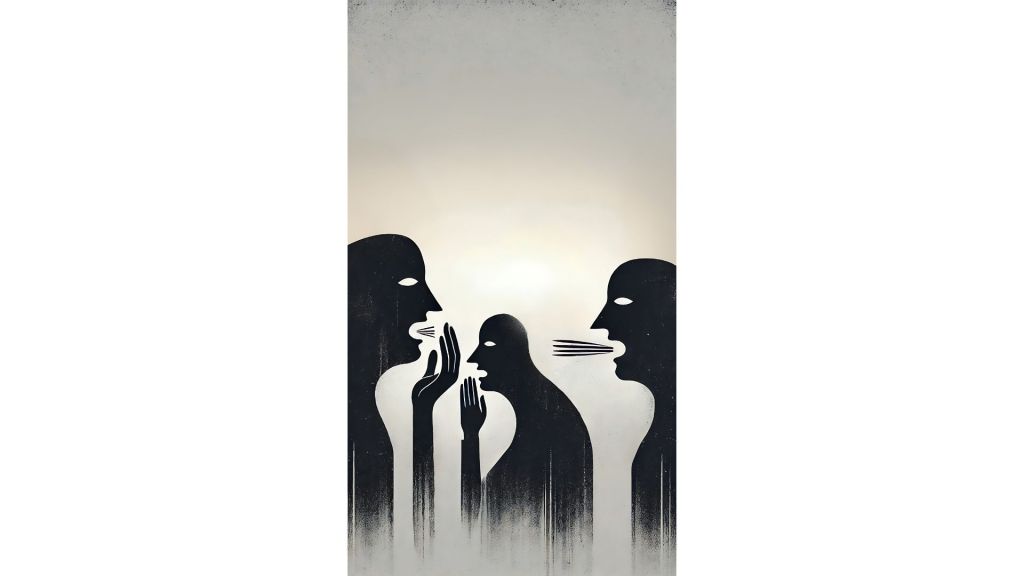
A Challenge: Cut Out Gossip
Gossip is one of the most toxic forms of information you can consume.
It feeds insecurity, fuels comparison, and keeps your mind stuck in cycles of negativity and judgment.
But here’s the key: it’s not enough to stop gossiping. You also have to stop allowing gossip around you. Even when you stay quiet, your brain absorbs that emotional junk.
Challenge yourself for one week:
- Don’t engage in gossip
- Don’t listen to gossip
- Redirect conversations toward ideas, goals, and solutions
- Surround yourself with people who speak truth and encourage growth (stay away from politics for a little while)
Notice how your energy, focus, and mindset shift. It’s like detoxing your brain.
What You Can Do to Break the Cycle
- Be intentional about who you spend time with. Choose people who bring positivity, growth, encouragement.
- Limit or eliminate exposure to fear-based, sensationalized media. Curate your media intake.
- Be conscious of your social‑media habits – especially how often you scroll, how much you compare, and how deeply you engage with negativity or drama.
- Prioritize real-world connection, in-person relationships, and supportive communities over virtual likes, comments, or shares.
- Recognize that your information diet ≠ only what you read online – it includes relationships, environments, conversations, and mental inputs.
Your Healthy Information Diet Menu
Think of your brain like your body: it needs nourishment, not junk. A healthy information diet includes:
- Uplifting, educational content that inspires growth or teaches new skills.
- Meaningful conversations with friends, family, and colleagues who support and challenge you in positive ways.
- Boundaries around toxic media and gossip, including online feeds, chat groups, and negative social circles.
- Time offline to reflect, read, create, or simply be present.
- Exposure to diverse perspectives without fear or judgment, helping your mind stay flexible and informed.
- Information that will better your life mentally, physically, spiritually, and financially. 4 keys to a balanced life.
By consciously choosing what enters your mind every day, you can reduce anxiety, boost clarity, and reclaim your mental energy. Your information diet can be just as intentional and nourishing as the meals you prepare for your body – and the payoff is a healthier, calmer, more balanced life.
Some links in this post may be affiliate links. If you click and make a purchase, I may earn a small commission at no extra cost to you. Thank you for your continued support!

 Free Yourself Daily Hub
Leave a comment