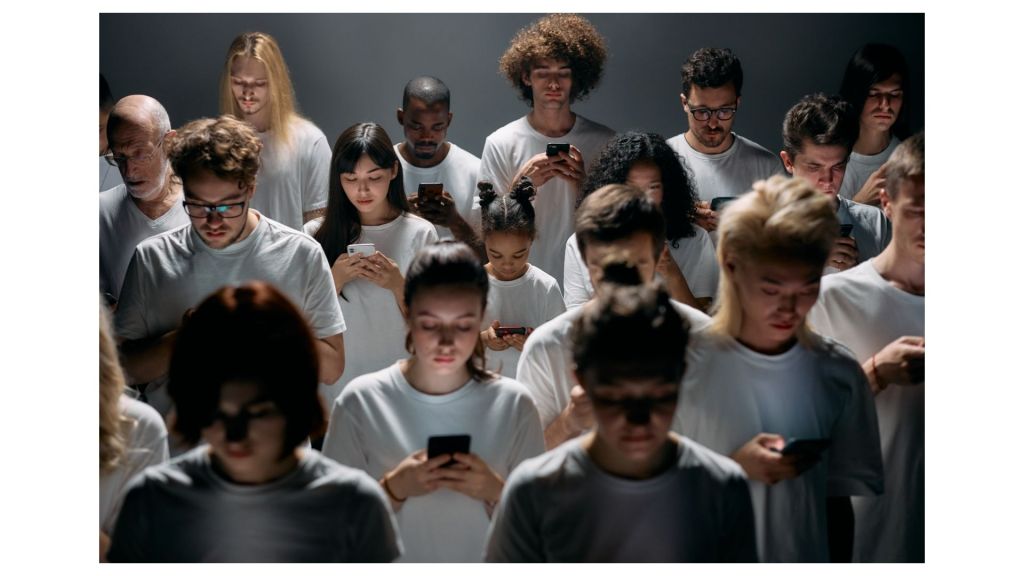
We live in a world where screens dominate our attention. The average person spends 4–5 hours a day scrolling, and checks their phones 58 times per day! Our time is fragmented into short bursts of swipes, taps, and scrolling, keeping our brains in a near-constant state of stimulation.
If you’re like me, born in the 80s, imagine being a kid and someone telling you that one day, you would spend hours glued to a 3–4 inch screen in your hand, endlessly scrolling instead of playing outside, reading a book, or engaging with friends. It would have sounded absurd—but this is the reality we now live in.
For teenagers, hours lost scrolling translate into missed opportunities for play, social learning, and emotional development. For adults, it’s hours lost to comparison, envy, and a dopamine-driven loop that never truly satisfies. Endless scrolling is more than just a habit—it’s a time thief, a mind hijacker, and a mental health risk.
The Neuroscience of Scroll Addiction
Apps exploit the brain’s reward circuitry. Each swipe or tap carries the potential for something novel or gratifying-likes, funny posts, shocking headlines-which triggers dopamine release, the neurotransmitter responsible for motivation and pleasure. Over time, this intermittent reinforcement creates a compulsive feedback loop, making us chase the next scroll even when it brings no meaningful reward.
Effects on the Brain
- Attention Fragmentation – Repeated short bursts of engagement rewire the brain to crave novelty, making sustained focus difficult.
- Reduced Working Memory – Constant interruptions prevent the brain from consolidating information, impairing problem-solving and reasoning.
- Shallow Processing – Reading in short bursts trains the brain to skim rather than deeply process or critically analyze information.
- Emotional Dysregulation – Rapid exposure to comparison triggers stress hormones like cortisol, fueling anxiety and irritability.
- Sleep Disruption – Late-night scrolling suppresses melatonin, affecting rest, mood, and cognitive performance.
Essentially, we are losing our ability to connect and critically think!
Several studies have shown a clear connection between screen time and mental health risks, highlighting a dose-response effect: as screen time increases, so does the likelihood of anxiety, depression, and other concerns.
For example, adolescents who spend 4–6 hours per day on screens have a 35% higher risk of experiencing depression symptoms compared to those who spend less than 2 hours, with the risk jumping to 88% for those exceeding 6 hours daily. Research from the University of California at San Francisco also found that children aged 9 to 13 who significantly increased social media use over three years saw a 35% rise in reported depressive symptoms, illustrating how prolonged exposure can exacerbate mental health issues.
Data from the U.S. Centers for Disease Control and Prevention further supports this trend. Teenagers spending 4 or more hours daily on screens reported 27.1% anxiety symptoms and 25.9% depression symptoms, compared to 12.3% and 9.5% among peers with less than 4 hours of screen time.
Interruptions and Refocusing
It has been proven that our brains take time to recover after being distracted. When we switch tasks—like checking a phone mid-work-we experience attention residue, where part of our focus remains on the previous activity.
- On average, it can take up to 23 minutes to fully regain focus after an interruption.
- Even a quick 1–2 minute scroll can fragment attention repeatedly throughout the day, dramatically reducing deep focus and critical thinking.
- A Carnegie Mellon study found that workers toggling between multiple tasks can lose up to 40% of their productivity due to context switching, increasing both mental fatigue and stress.
This explains why people are irritable when interrupted while scrolling and why even uninterrupted scrolling leaves the brain stressed and fatigued.
Implications for Critical Thinking
Long-term understanding requires sustained attention, repetition, and meaningful engagement. Our prefrontal cortex-the part responsible for reasoning, judgment, and critical thinking-strengthens when we deeply process information, connect concepts, and reflect. Constant short-burst scrolling trains the brain for speed and novelty, not depth. Over time, this may weaken critical thinking and reduce our ability to synthesize complex ideas.
The Anxious Generation
Jonathan Haidt’s The Anxious Generation shows how the rise of smartphones and social media has rewired childhood. Unlike previous generations, which grew up with play-based, present-focused experiences, today’s youth spend more time tethered to screens. Key consequences include:
- Social Deprivation – Less face-to-face interaction
- Sleep Deprivation – Late-night scrolling disrupting natural rhythms
- Attention Fragmentation – Reduced capacity for sustained focus
- Addiction – Dopamine-driven compulsive behaviors
Mental health outcomes are striking: spikes in anxiety, depression, self-harm, and social withdrawal have coincided with smartphone adoption.
The Social and Emotional Toll
- Teenagers – Exposure to curated images of peers and unrealistic relationships distorts self-image and fosters anxiety.
- Adults – Influencers showcase “perfect” homes, careers, and relationships, often funded by followers’ engagement. Comparing your life to these curated realities erodes satisfaction and can lead to poor financial and relational choices.
Interruptions while scrolling trigger irritability, while uninterrupted scrolling keeps the brain in a low-level stress state, leaving us emotionally drained and cognitively fatigued.
Time Lost
Consider this: if the average person replaced4 hours of daily scrolling with meaningful activity, like learning a language, they could reach fluency in Spanish in 5–7 months.
The Smartphone as the New Apple
It’s difficult not to make the comparison in a biblical sense: the smartphone has become the modern-day apple in the Garden of Eden. Like the fruit in the story, it promises to open our eyes-offering knowledge, connection, and awareness of the world beyond us. With a smartphone, we can instantly communicate, access endless information, and witness lives across the globe, giving the illusion of empowerment and insight. But it all comes with a hidden cost: distraction, anxiety, comparison, and compulsion quietly pull us away from the tangible joys of life, the presence of our friends and family, the beauty of nature, meaningful conversations, and moments of quiet reflection. What appears to be knowledge and connection can quickly become captivity, fracturing our attention, stressing our minds, and compromising true presence and fulfillment.
Yet, when we pause and step away from our screens, there is another kind of awareness waiting for us. A simple walk outside, a quiet moment in the sunlight, or a gaze at the vast sky can awaken a sense of cosmic awe, the realization that we are standing on a floating rock in endless space, orbiting a star that powers our lives, surrounded by countless other worlds. These moments of mindful wonder remind us that life is bigger than notifications, likes, and constant scrolling. They restore perspective, calm the mind, and reconnect us with thesimple, profound beauty of existence that no screen can replicate.
The Presence Challenge: Cut the Scroll Cold Turkey
Breaking free from the scroll is about intention and reclaiming presence:
- Turn off notifications – Let the phone rest.
- Leave your phone aside when working – This is called anticipatory anxiety”-it’s the worry or nervousness about something that might happen in the future.
- Engage outdoors – Walk, run, garden, or observe the world.
- No-phone family time – Board game nights, meals, or shared activities without devices.
- Two-week commitment – Challenge yourself and your family to minimize phone distraction. Notice how focus, joy, and connection grow.
Even small steps, putting the phone down during dinner, savoring a conversation, or taking a walk without a device, restore mental bandwidth, improve mood, and strengthen relationships.
Conclusion: Scroll Less, Live More
Endless scrolling is more than a habit; it’s a structural change in how we experience life. Our attention is the currency of the present. Each swipe traded for dopamine is a swipe away from connection, creativity, and contentment. By understanding brain science, the cognitive costs of interruptions, the mental health consequences, and lessons from The Anxious Generation, we can step out of the feed and step into our lives-fully present, fully alive.
Every moment reclaimed from the scroll is a moment truly lived.
This post was inspired by a recent visit to a waiting room, where every single person was tethered to their screens, including staff who weren’t actively busy with work—and it made me realize how much this constant connection can increase anxiety, instead of simply taking a moment to be present with yourself, stop the noise, and just exist.
Some of the links in this post are affiliate links. This means that if you click on a link and make a purchase, I may earn a small commission at no additional cost to you. I only recommend products or services that I personally use, trust, or believe will provide value to my readers. Thank you for your support!

 Free Yourself Daily Hub
Leave a comment